The Condenser Pad, the Clearance, and the Noise Nobody Connects to a Failing Air Conditioner
Three things most homeowners never think about with their outdoor AC unit, until one of them is the reason the system stops cooling.
September 2, 2026 · 3 min read
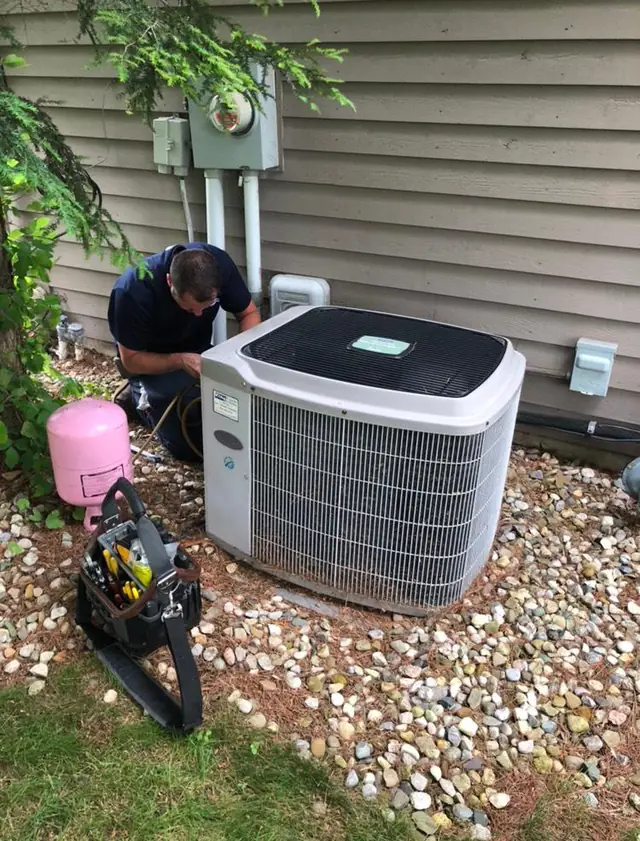
The outdoor unit sits against the side of the house, and most people never look at it twice between the day it's installed and the day it stops working. Three things quietly determine how long it lasts and how well it runs, and none of them involve looking inside the unit.
The pad underneath it
A condenser sits on a pad, usually concrete or a composite equipment pad, and that pad's job is to keep the unit level and off direct contact with wet ground. Over years, a pad can settle unevenly, especially in yards with heavy clay soil that holds water and shifts with freeze and thaw cycles. A unit that's tilted, even slightly, puts uneven strain on the internal components and the refrigerant lines running to it. It's one of those problems that's easy to fix early and expensive to ignore for a decade.
Clearance around it
Outdoor condensers need open air on every side to pull air through the coils and push heat away from the house. Over a few summers, mulch beds creep closer, shrubs planted small get bigger, and grass clippings and cottonwood fluff build up on the coil fins without anyone noticing. A unit that's been slowly boxed in by landscaping has to work harder to move the same amount of air, which shows up as longer runtime, weaker cooling on the hottest days and, eventually, a compressor that's been overworked for longer than it should have been.
- Keep plantings, mulch beds and stored items back from all sides of the unit, not just the front.
- Rinse debris and fluff off the coil fins with a garden hose from the outside in, never a pressure washer, which can bend the fins.
- Clear leaves and grass clippings away from the base after mowing, especially through late summer.
- Make sure nothing sits directly on top of the unit, including a grill, patio furniture or a tarp.
The noise nobody connects to anything
Most people wait for a system to stop cooling before they call. By then it's often been telling on itself for weeks. A new buzzing or humming that wasn't there before can be a failing capacitor, the part that gives the compressor and fan motor the jolt they need to start. A grinding or screeching sound usually points to a motor bearing wearing out. A hissing or bubbling noise, especially right after the system shuts off, can mean a refrigerant leak. None of these mean the unit is finished, most are a straightforward repair caught early, but every one of them gets more expensive the longer a homeowner assumes it's nothing.
A unit clicking on and off more often than it used to, without an obvious reason, is worth a call too. Short cycling puts wear on the compressor every time it restarts, and it's often the first sign of a problem that hasn't announced itself any other way yet.
What we're actually listening for
When one of our techs comes out for a noise complaint, we're not just diagnosing the sound, we're checking the pad, the clearance and the coil condition at the same time, because they're rarely unrelated. A unit that's been sitting crooked on a settled pad for two summers is often the same unit that's been slowly starved for airflow by the hedge that grew in next to it. Catching both early is a lot cheaper than a hot afternoon with no air conditioning and a compressor that's been asked to do more than it should have for longer than anyone realized.
Worth a look before the first hot stretch
A quick walk around the unit each spring, before the first real heat wave, catches most of this early. Check that nothing grew into the clearance zone over winter, confirm the pad still looks level, and listen for anything unusual the first time the system kicks on for the season. None of that requires taking anything apart or opening the unit up, it's simply paying attention for five minutes before the season gets busy. If something looks off, that's the point to call rather than waiting for a stretch of ninety-degree afternoons when every other air conditioner in the county is also asking for a service call.
City Plumbing, Heating & Air Conditioning, (269) 983-6595
Call (269) 983-6595More articles
Why Pipes Freeze Where They Do in a Berrien County House
A guide to the exact spots in a Berrien County home where pipes freeze first, and what to do while you wait for a plumber.
Furnace or Boiler: What Actually Decides a Replacement
An honest look at what actually pushes a furnace or boiler from repair into replacement, including the years we'll tell you to run it one more winter.