Sewer and Drain Trouble in Older Downtown St. Joseph Properties
Why a camera goes into the line before we quote anything, and what usually turns out to be the actual problem in the older buildings around State Street.
September 10, 2026 · 3 min read
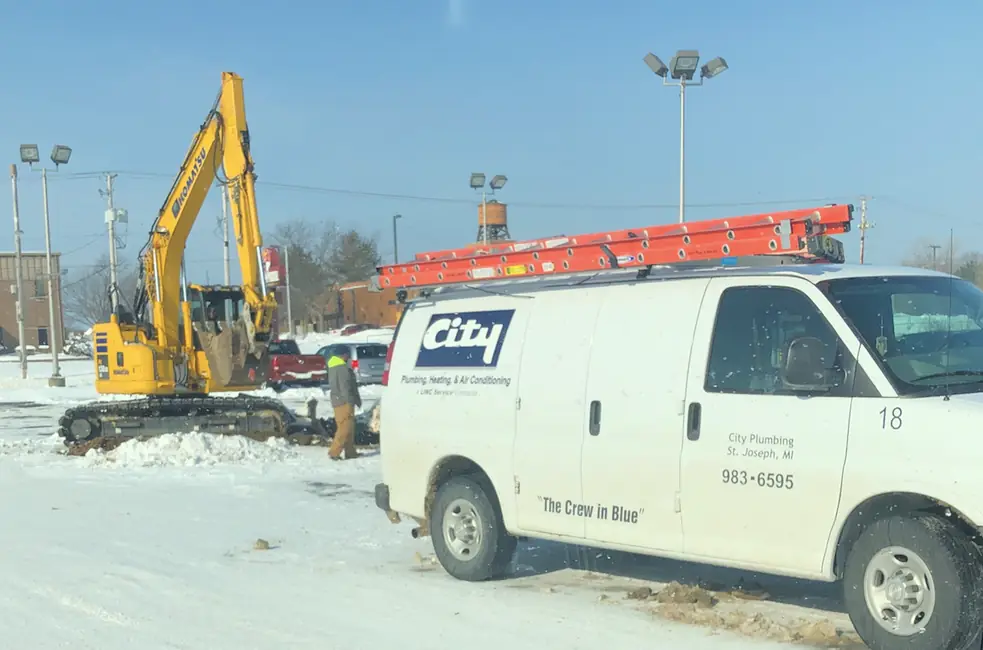
Working out of 407 State Street means a lot of our sewer and drain calls come from buildings nearly as old as the block we're on. Downtown St. Joseph has a mix of century-old residences and commercial buildings that have been restaurants, shops and offices under different owners for decades, and the pipe underneath them is often original or close to it.
The usual causes, in older lines specifically
- Tree roots finding their way into a clay or cast iron line through a joint or a hairline crack, then spreading inside the pipe until they catch everything that flows past.
- Grease buildup, especially from any building with a commercial kitchen history, current or past. Grease that goes down a drain warm cools and hardens further along the line, narrowing the pipe from the inside out over years, not overnight.
- Bellied or settled sections, where a length of older pipe has sagged over decades of ground movement, creating a low spot that collects waste and paper instead of letting it flow through.
- Old joints and transitions between pipe materials, common in a building that's had partial repairs or additions over a hundred-plus years, which are frequently where a line first starts to fail.
Why the symptoms lie
A slow drain in one sink can mean a dozen different things, and the symptom rarely tells you which one. Gurgling in one fixture when another one drains, water backing up in the lowest drain in the building first, a smell that comes and goes rather than staying constant, all of these can point to a simple local clog or to a much bigger problem further down the line. Guessing from the symptoms alone, and quoting a repair based on that guess, is how a homeowner or a building owner ends up paying to fix the wrong thing.
What the visit itself looks like
A camera inspection means feeding a waterproof camera on a flexible line into a cleanout or an accessible fixture, with a technician watching the feed in real time on a monitor at the truck. It doesn't require digging anything up just to look, and it doesn't take all day. What it does take is finding the right access point, which in an older downtown building sometimes means locating a cleanout that's been paved over, built around, or forgotten about entirely since it was installed.
Why the camera goes in first
A camera inspection shows us exactly what's happening inside the line rather than what we'd otherwise be guessing at from the symptoms above ground. It tells us whether we're looking at roots that need clearing, a grease buildup that needs a different approach than a straightforward rodding job, a bellied section that no amount of clearing will actually fix, or a joint that's failed and needs to be dug up and replaced outright. It also tells us where the problem actually sits along the line, which matters a great deal in a downtown block where the sewer might run under a sidewalk, a neighboring property line, or the street itself.
We'd rather spend the time running a camera than hand a customer a quote based on a guess, because the fix for roots and the fix for a bellied pipe aren't the same job, and they don't cost the same either. A camera inspection is also simply cheaper than digging in the wrong spot.
What actually fixes it
Roots and most grease buildup clear with sewer rodding or cleaning, sometimes on a repeat schedule if the tree that caused it is staying put. A bellied section or a failed joint is a different job, usually meaning a section of the line gets dug up and replaced, and there's no way around that once the camera confirms it. Either way, we'll show you what the camera actually found before we start anything, not just tell you about it, so you know exactly what you're paying to fix and why.
If a downtown property has been slow to drain for a while, or backs up more than it used to, it's worth a camera inspection before it becomes an emergency call on a weekend. Century-old pipe under a busy block doesn't usually give much warning once it actually fails.
City Plumbing, Heating & Air Conditioning, (269) 983-6595
Call (269) 983-6595More articles
Why Pipes Freeze Where They Do in a Berrien County House
A guide to the exact spots in a Berrien County home where pipes freeze first, and what to do while you wait for a plumber.
Furnace or Boiler: What Actually Decides a Replacement
An honest look at what actually pushes a furnace or boiler from repair into replacement, including the years we'll tell you to run it one more winter.